FV_font_PC
FV_font_SP-1
ADS_img_2-1_SP
ADS_img_2-2_SP
ADS_img_3-1_SP
ADS_img_3-2_SP

Features

ADS_img_6-2

ADS_img_7-1

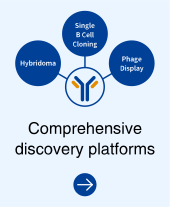
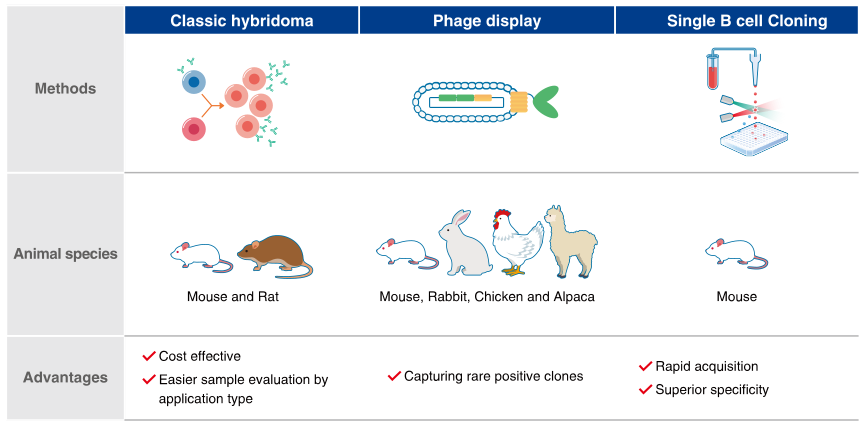
Three platforms of Antibody Discovery

Collaborative Workflow

ADS_img_8

Initial Consultation

ADS_img_9

Proposal & Planning 

ADS_img_10

Project Execution

ADS_img_11

Joint Review & Delivery

Stability & Solubility Optimization

Data-driven buffer screening for better stability and solubility of your antibody.

Selection based on:
  • DSF melting curve analysis
  • SEC-HPLC
  • Aggregation propensity analysis by DLS

Optional:

Mutagenesis to enhance solubility.

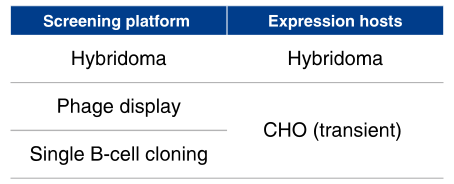
Antibody Clone Selection & Expression

Antibody clones areselected through ELISA, flow cytometry, and sequence-based diversity analysis.

Antibody Characterization

  • Concentration (based on Absorbance at 280 nm)
  • SDS-PAGE
  • SEC-UPLC (Size-Exclusion Chromatography using UPLC) 
  • Specific Binding (ELISA or Flow cytometry)
  • Biolayer Interferometry (e.g., Octet)
  • DSF, SLS, DSL including Tagg and B22 (e.g., UNCLE)
  • Endotoxin Measurement (LAL assay)
  • Mycoplasma Detection (PCR amplification)

MBL logomark RGB_1-1

About MBL

MBL was founded in 1969 as the first manufacturer of antibodies in Japan. Using technology built on advances in immunology and molecular biology, MBL offers clinical diagnostics and research reagents designed for analysis of proteins and/or genes associated primarily with autoimmune disorders, cancer, gynecological diseases, and infectious diseases. In recent years MBL has also been actively developing biomarker reagents and companion diagnostics, taking advantage of our strength in immunological and gene detection techniques.

→ About US